
An Ode to Our Olive Trees
We live on the Wine Road that leads to Bolgheri, surrounded by vineyards where some of Italy’s most famous wines are produced. But today I want to talk about another plant that is just as much a part of our landscape, our history, our food, and my heart: the olive tree.
Our olive harvest in Tuscany has become an annual tradition—a day to gather friends, pick the olives, and bring home fresh extra virgin olive oil. This is the story of our trees, including the ones nobody wanted, and a few practical things I’ve learned about enjoying their oil.
Olive trees have been part of Mediterranean life for thousands of years. Ancient Egyptians, Greeks, Etruscans, and Romans all valued olives and their oil, using it for food, lighting, and religious ceremonies.
The olive branch has long been a symbol of peace, while the tree itself is a wonderful example of resilience.
With more than 15 million olive trees across Tuscany, it’s difficult to imagine our hills without their silvery leaves and twisted trunks.
Our olive trees: a very personal story
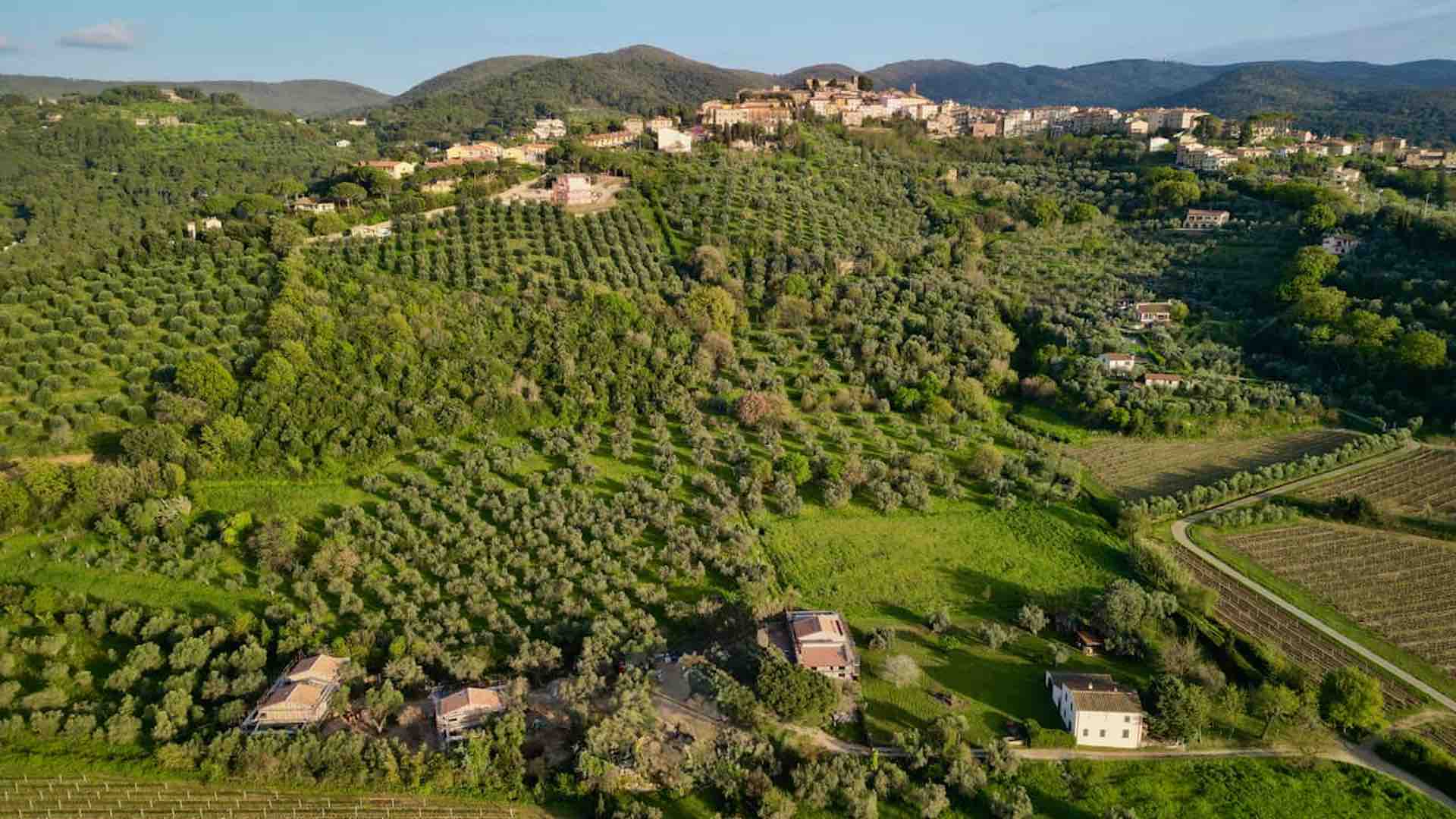
When we moved here more than 25 years ago, the land around our house had been abandoned for over 30 years.
Creating a garden from scratch has been one of the longest projects of my life, and it’s still not finished!
In the middle of the jungle we had to clear after so many years of neglect, the olive trees were already there. They had been neglected like the rest of the land, but we started pruning them and taking care of them. By our second year, they were already producing olives.
While the garden took much longer to take shape, the olive trees were generous almost from the beginning.
So we decided to harvest the olives ourselves, and that’s how our annual tradition began.
Over the years, I’ve developed a particular admiration for these trees, especially for their ability to survive and keep growing.
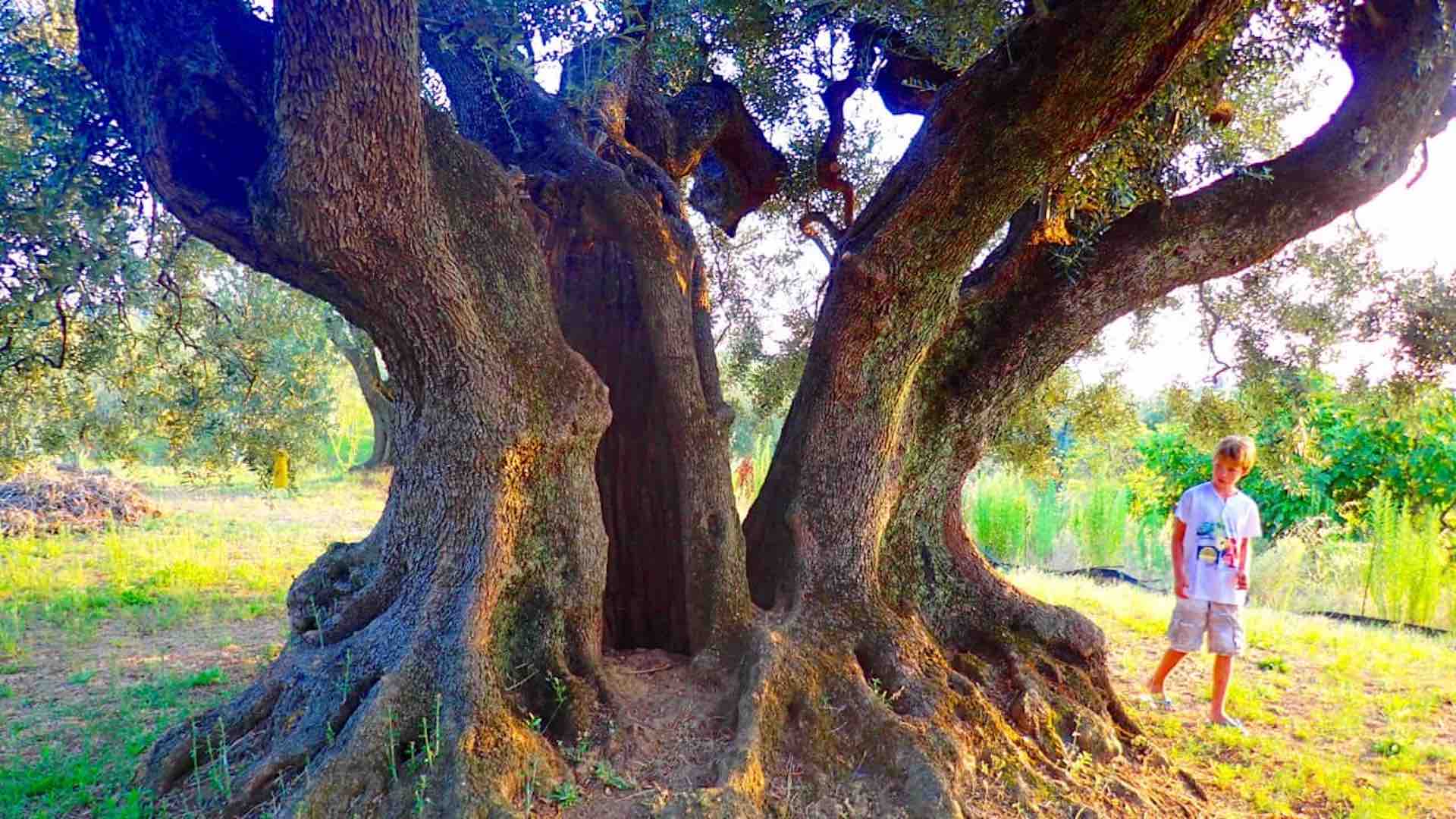
Around us, it’s not unusual to come across olive trees that are 400 or 500 years old. On another property not far from our home, there are trees believed to be around 2,000 years old.
Just imagine what these trees have lived through. The Roman Empire, the Renaissance, wars, generations of people coming and going.
And they’re still here.
The olive trees nobody wanted
What fascinates me just as much is their ability to grow again, sometimes even after being cut down.
I’ve seen this happen right here in our garden.
In 2024, more than 200 old olive trees were removed from the field across the road to make room for a vineyard. I was so sad to see them go.
Some of the trees with the most beautiful trunks were saved and offered for sale, and we bought a few. Older olive trees can be quite expensive!
But I was also interested in what had been left behind: the roots of the trees nobody wanted.
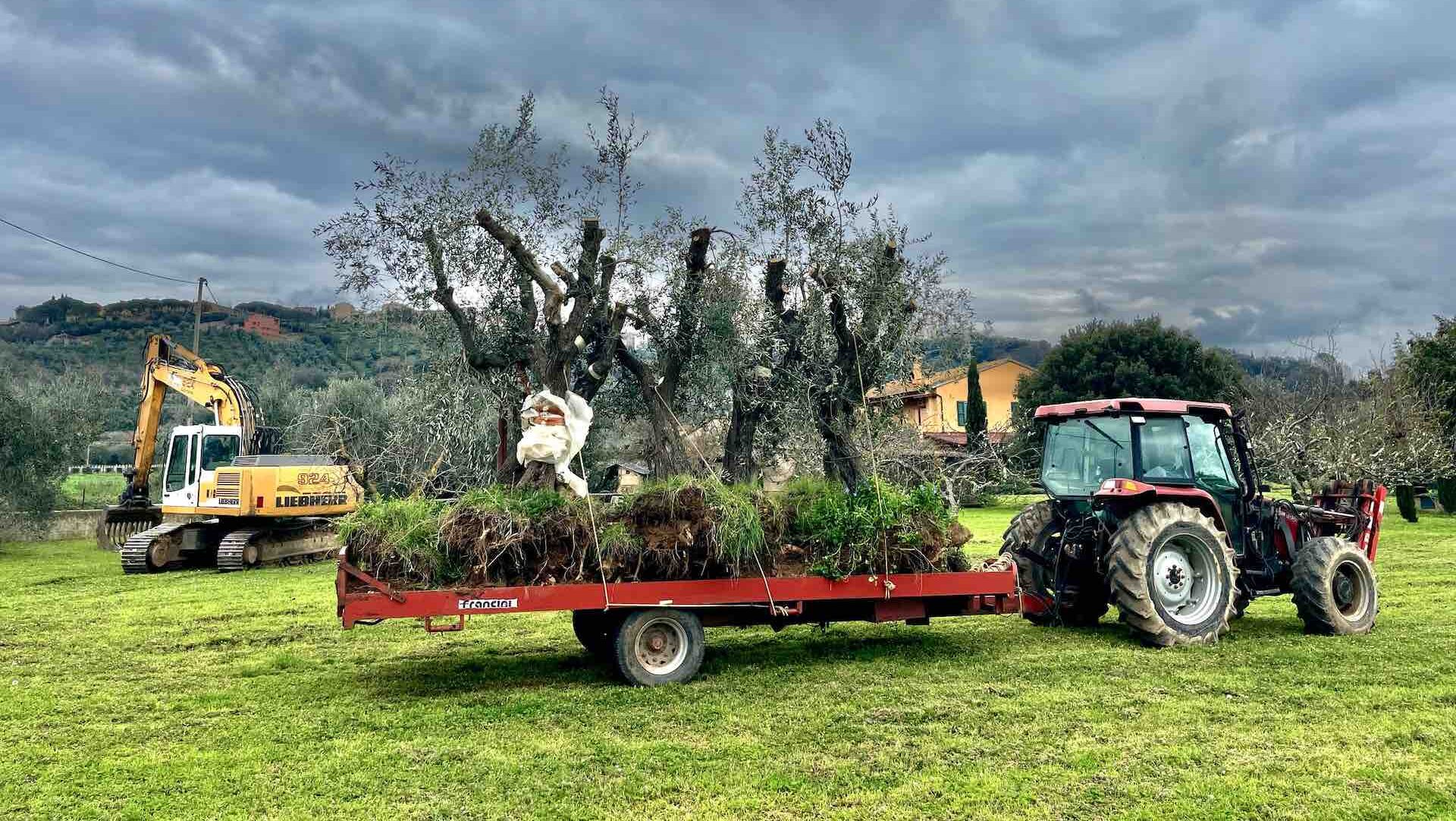
I collected about 35 of those unwanted roots and planted them along our fence, hoping they would grow again.
And they did! After just a couple of months, Arnaud and I were so happy to see the first green shoots. Today, some are already three feet tall!
Another 35 olive trees came from my friend Dina, who runs the nursery where I’ve bought most of our garden plants. After her husband passed away, she took over the business. One day she showed me some olive trees nobody wanted because their trunks weren’t straight enough.
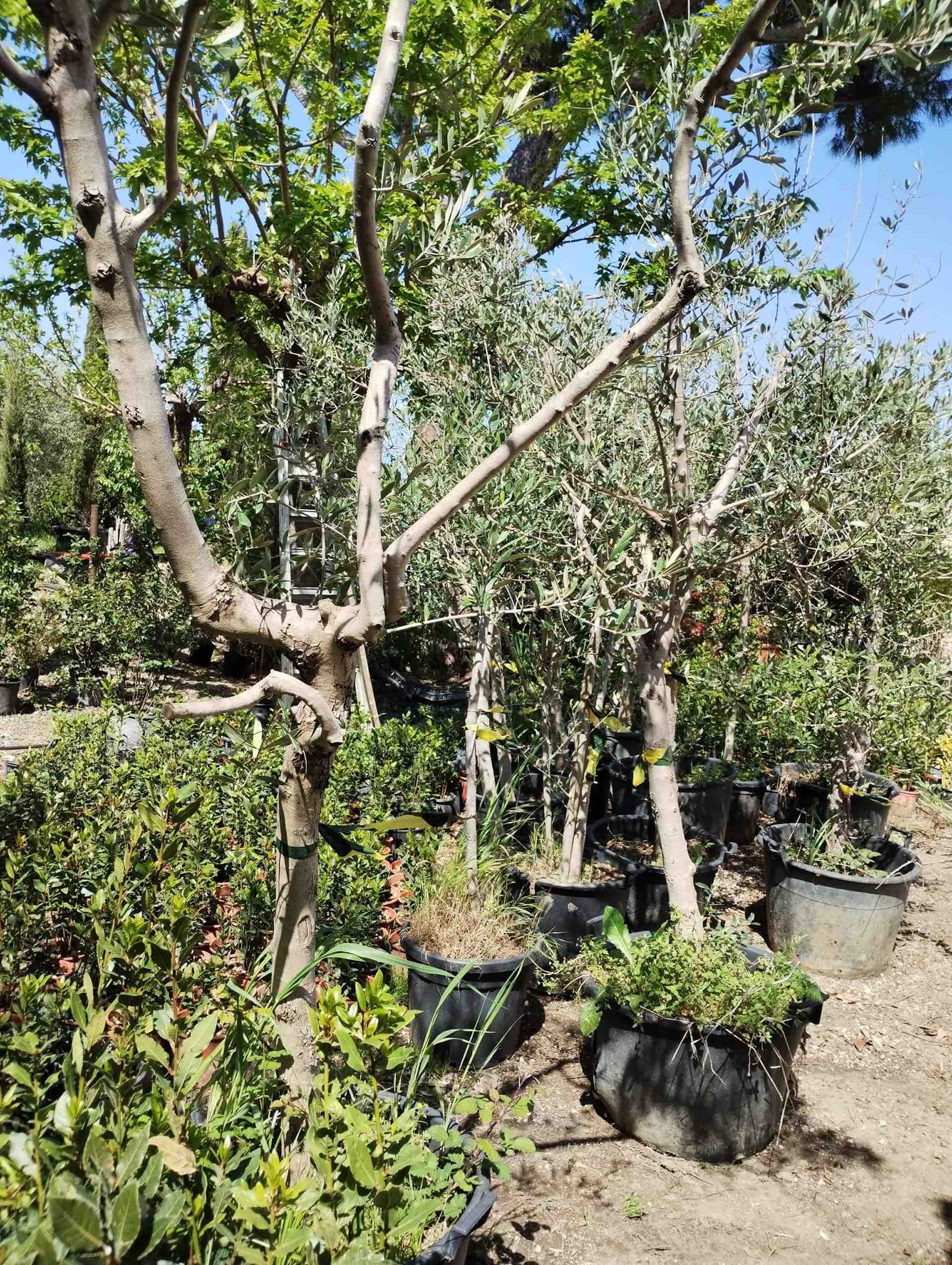
Of course, I bought them! I love the twisted trunks and irregular shapes of olive trees. Each one is different.
So now our garden is home to trees that were here long before us, others that nobody wanted, and some that have grown again from old roots.
October and the olive harvest
Every autumn, we harvest our olives, although the amount we collect changes enormously from one year to the next.
Olive trees often alternate between a year of abundant fruit and one with a smaller crop. Weather conditions during flowering, summer drought, and pests can also make a big difference.
One of our biggest problems is the olive fruit fly. The females lay eggs inside the olives, and the larvae feed on the fruit, damaging it and potentially affecting the quality of the oil. We don’t use pesticides on our olive trees. Since we produce olive oil just for ourselves, if one year the harvest is poor, we simply accept it.
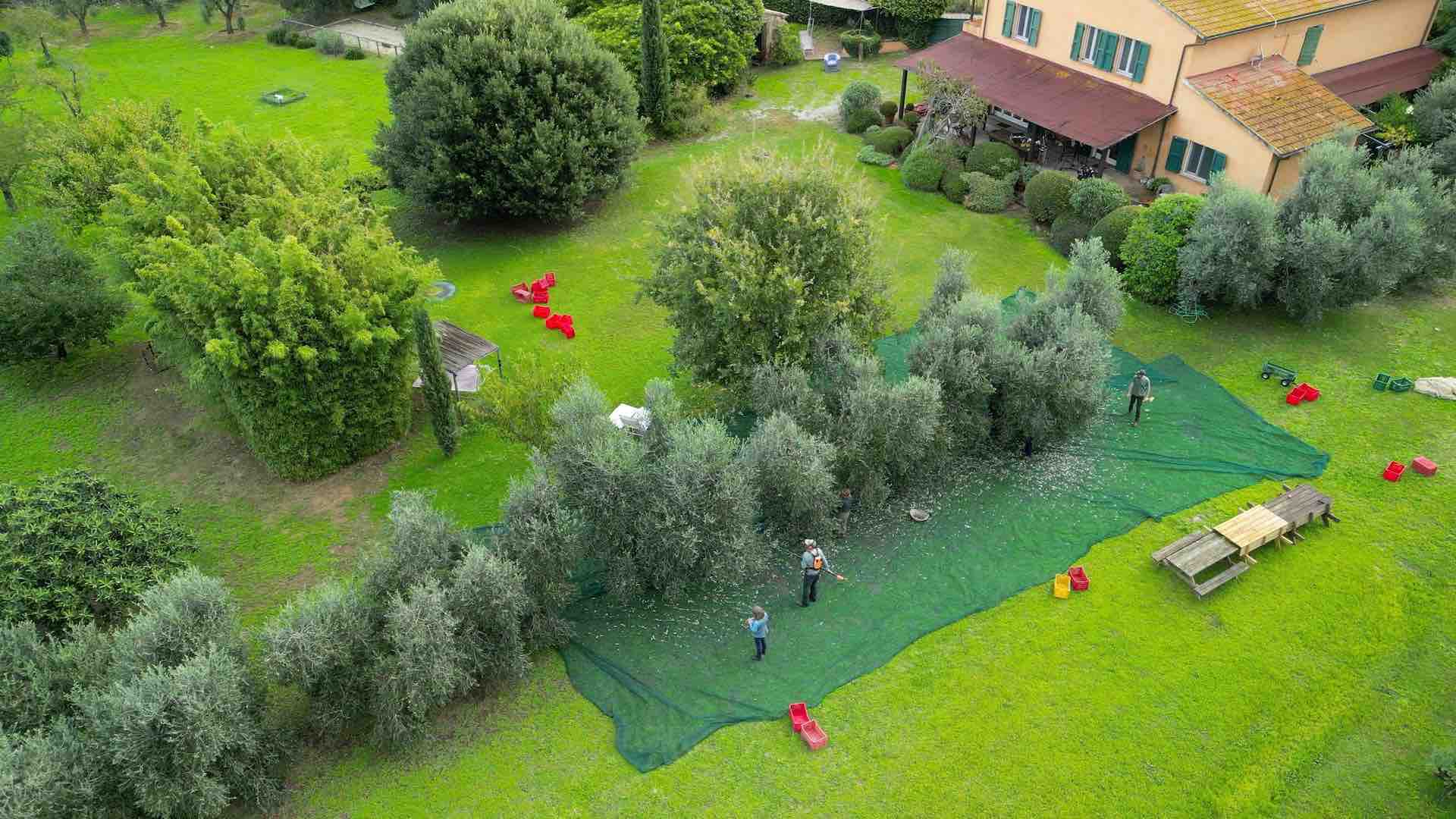
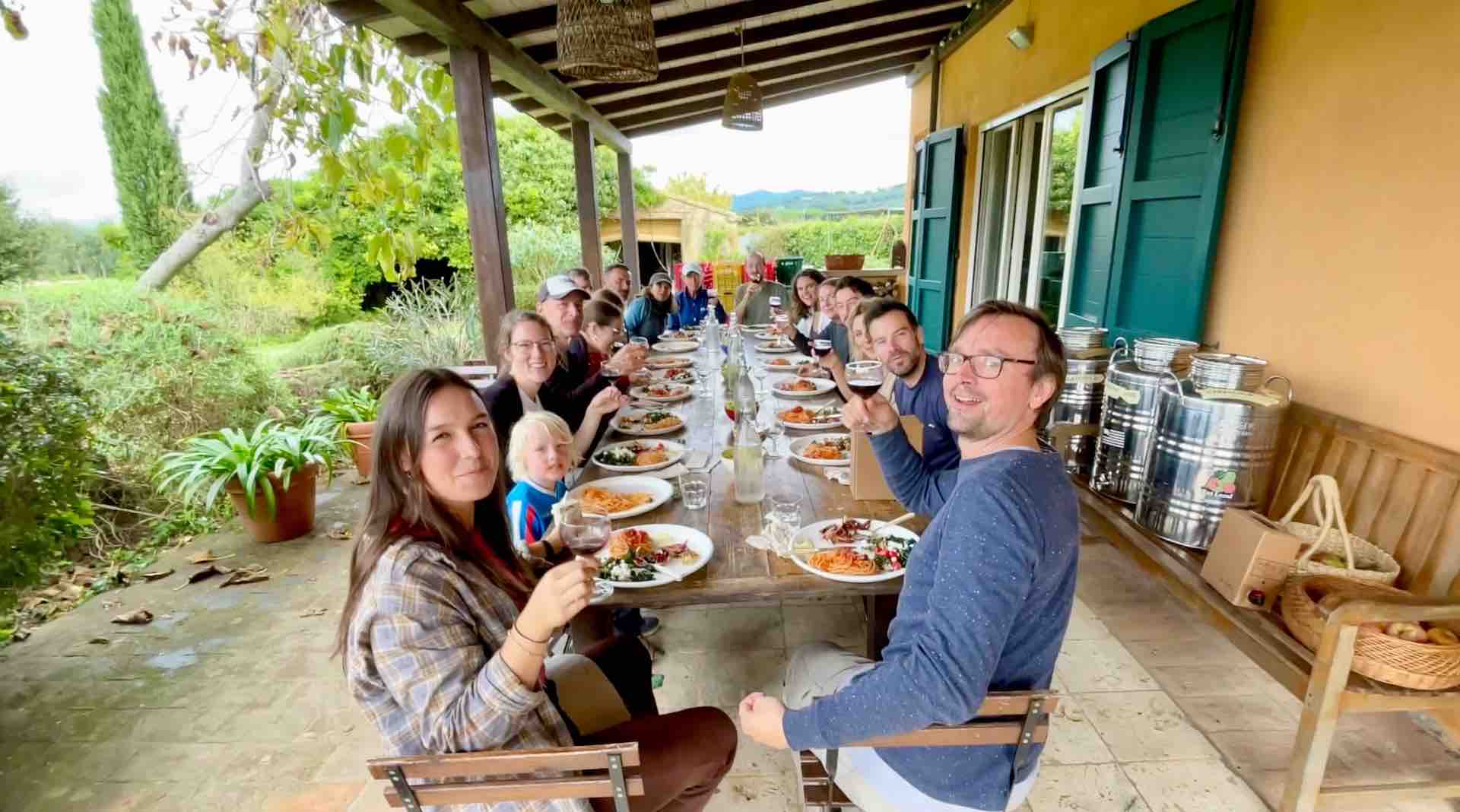
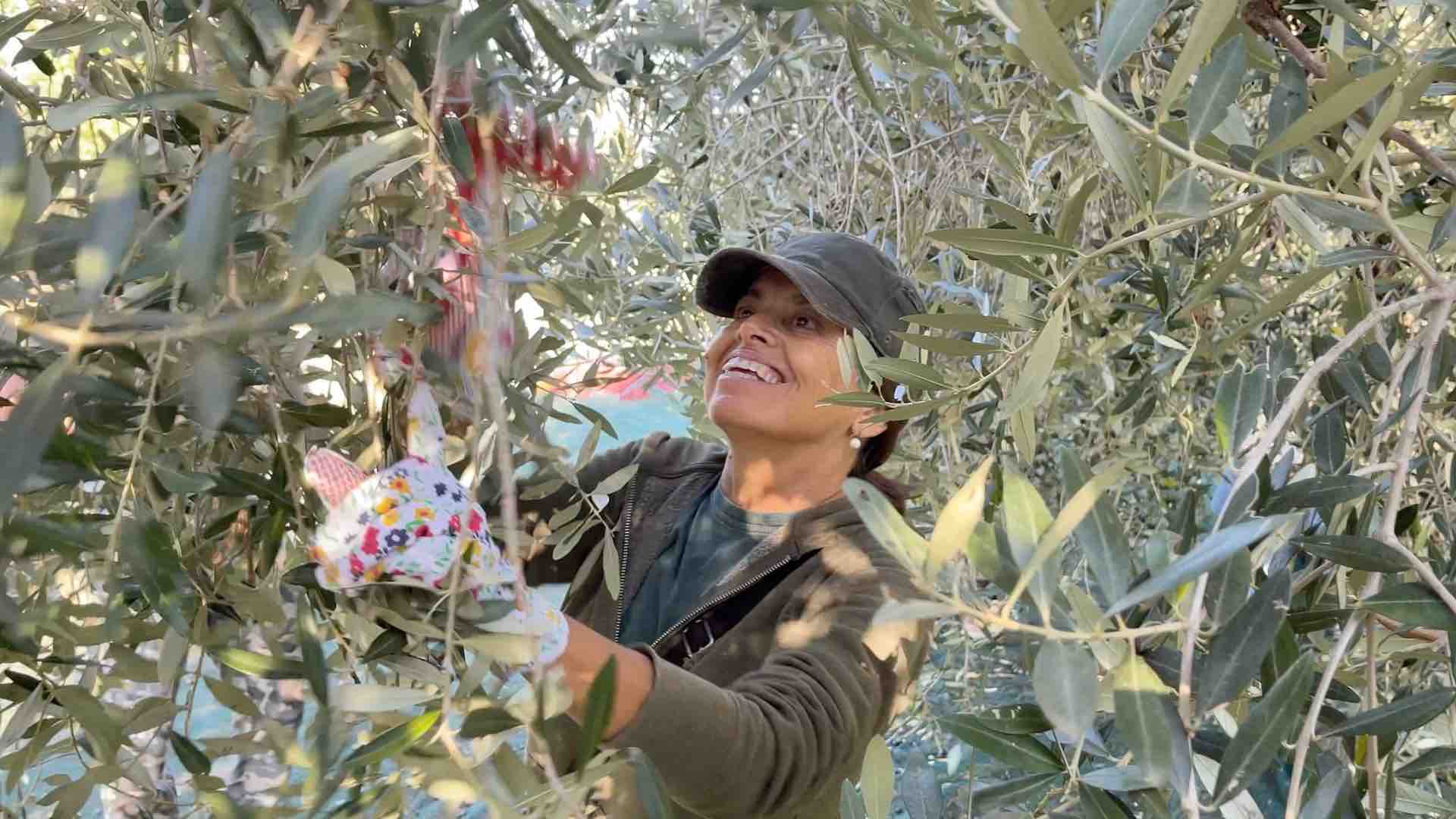
Here in Tuscany, the olive harvest is traditionally a family affair. It’s hard work, but also a wonderful opportunity to spend a day together.
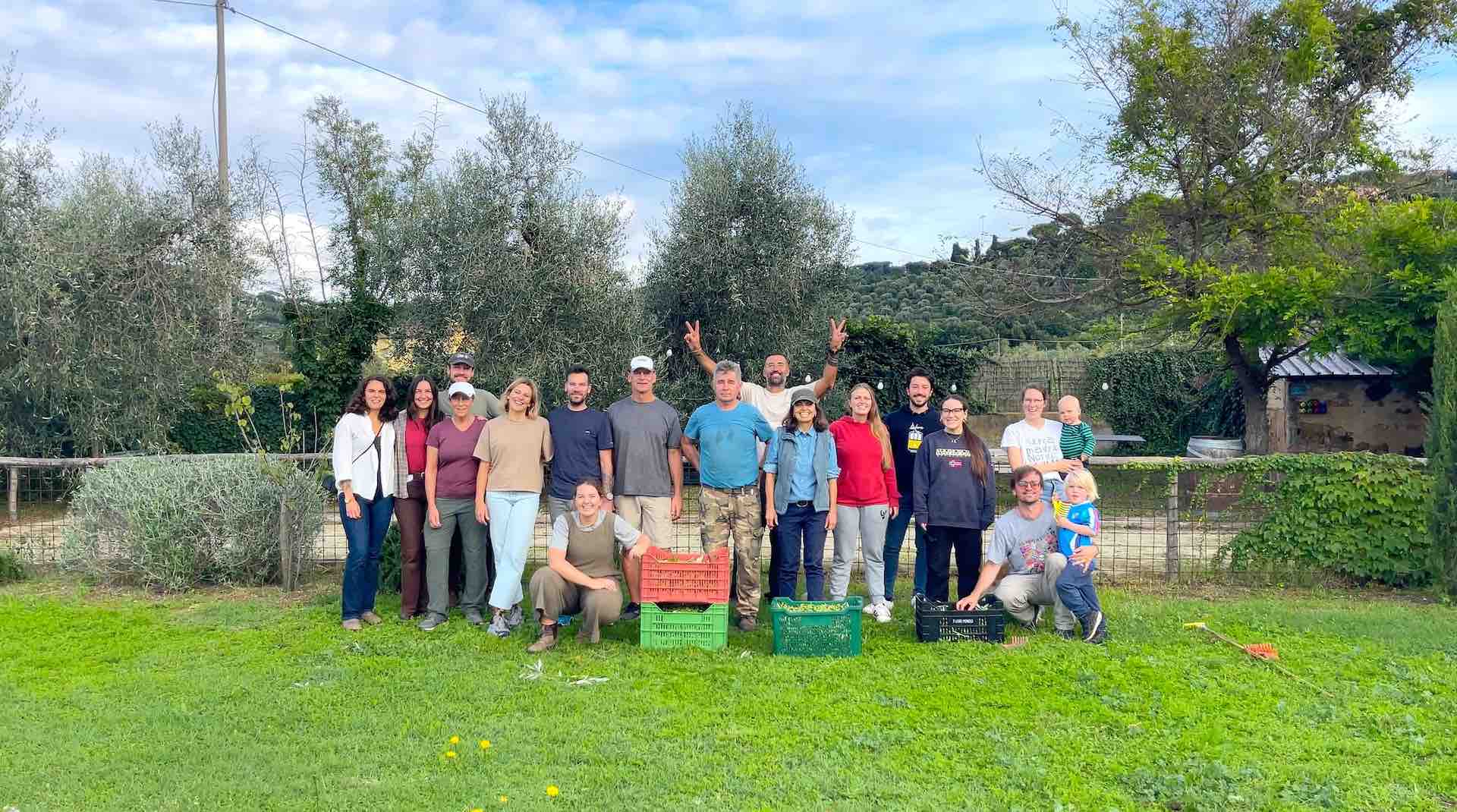
Every year, we invite friends to help us pick the olives. Some come from nearby, others from different parts of the world, so we always end up with a different team, depending on who’s around!
The tradition always includes a lunch break. I usually cook a big pan of spaghetti alla puttanesca for everyone!
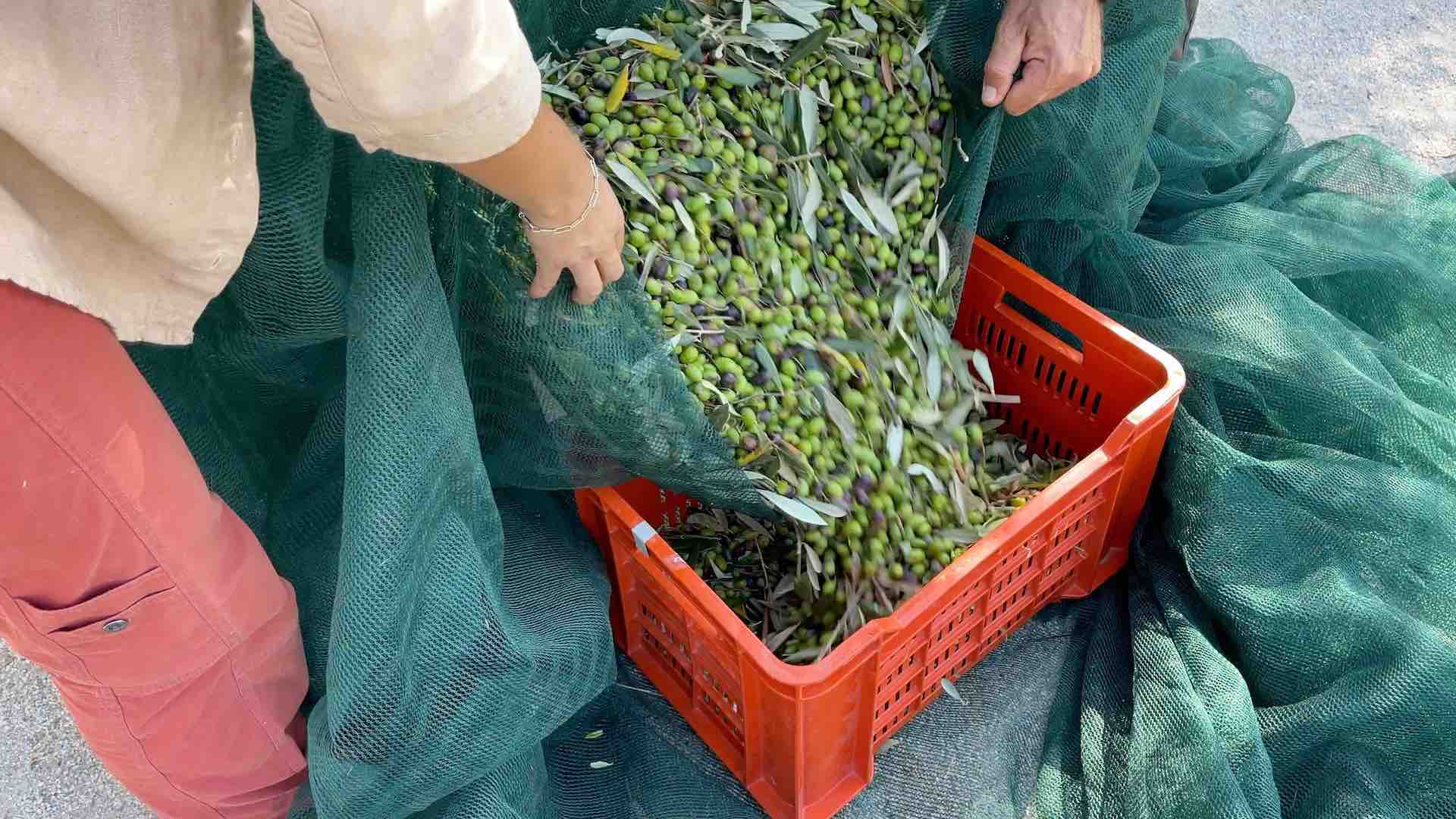
Once all the olives are in the crates, we take them to the frantoio, the olive mill, where they’re crushed and the oil is extracted. We always have our olives processed on the same day they’re picked.
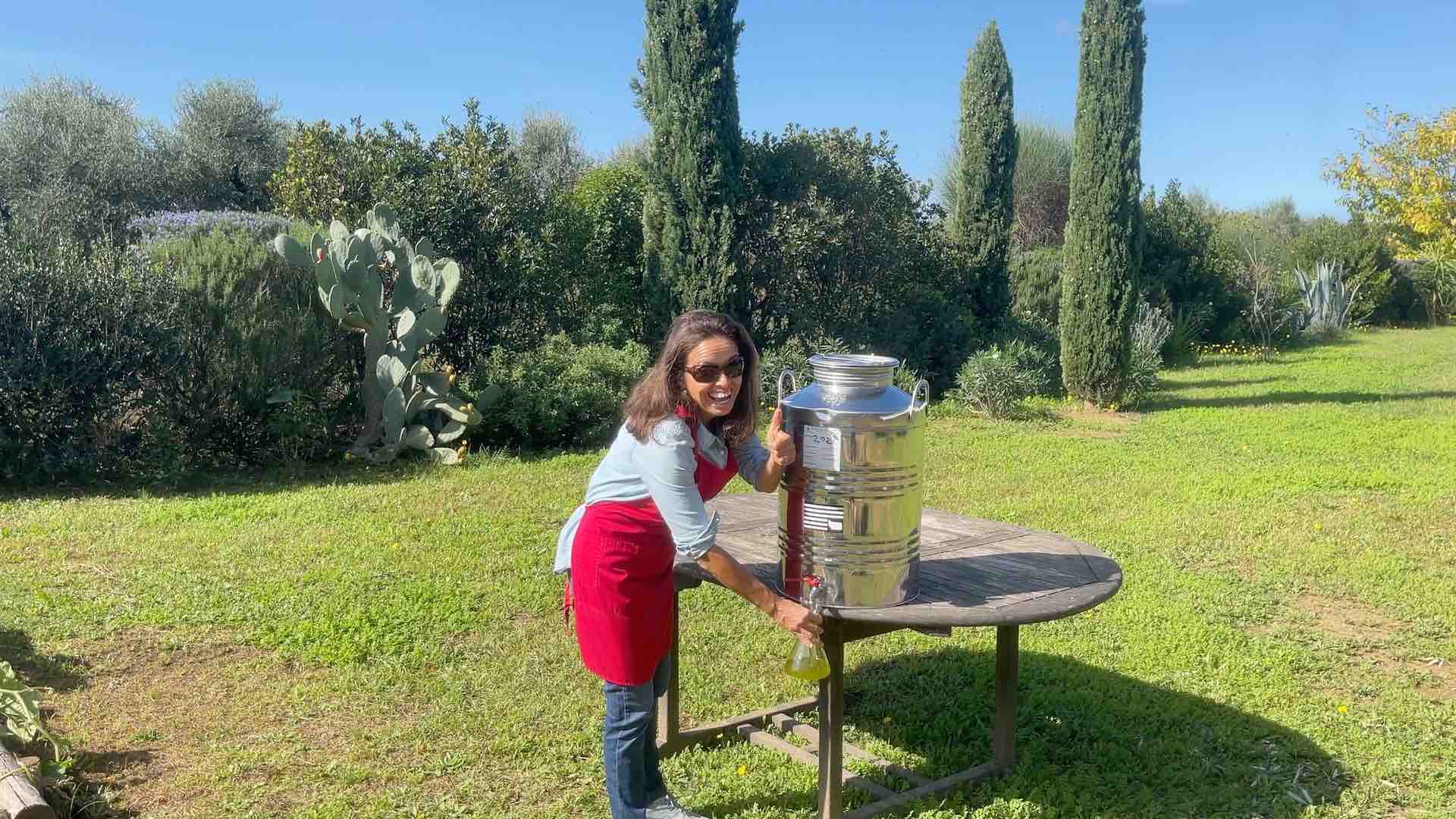
And finally, we bring home our freshly made extra virgin olive oil!
Arnaud always makes a video of our olive harvest. If you’re curious to see how olive oil is made, you can follow the whole process, from picking the olives to the moment the fresh oil comes out of the mill. Watch our last olive harvest video below.
A few practical things to know about extra virgin olive oil
What does good extra virgin olive oil taste like?
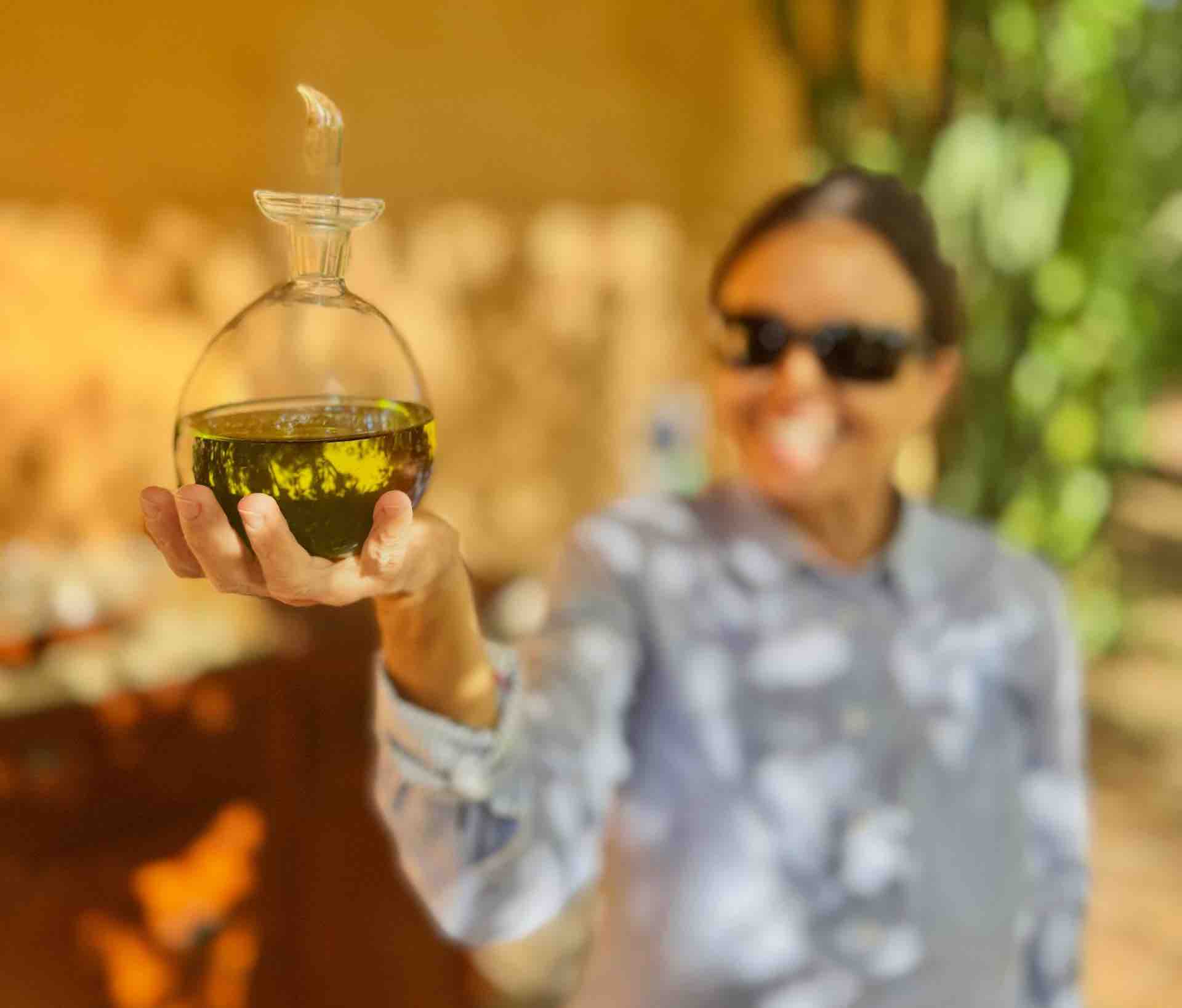
One of my favorite moments of the year is tasting the new olive oil.
If you’ve never tasted freshly made Tuscan extra virgin olive oil, you might be surprised. It can be intensely fruity, with aromas that remind you of freshly cut grass, artichokes, green tomatoes, or herbs. There’s often a pleasant bitterness, followed by a peppery sensation at the back of your throat.
Sometimes it even makes you cough!
That peppery feeling in your throat comes partly from a natural compound called oleocanthal, found in extra virgin olive oil.
And don’t worry if your olive oil tastes a little bitter or makes you cough! These are actually signs of a good extra virgin olive oil.
Some oils are more bitter or peppery than others. It depends on the type of olives, when they were picked, and how the oil was made and stored.
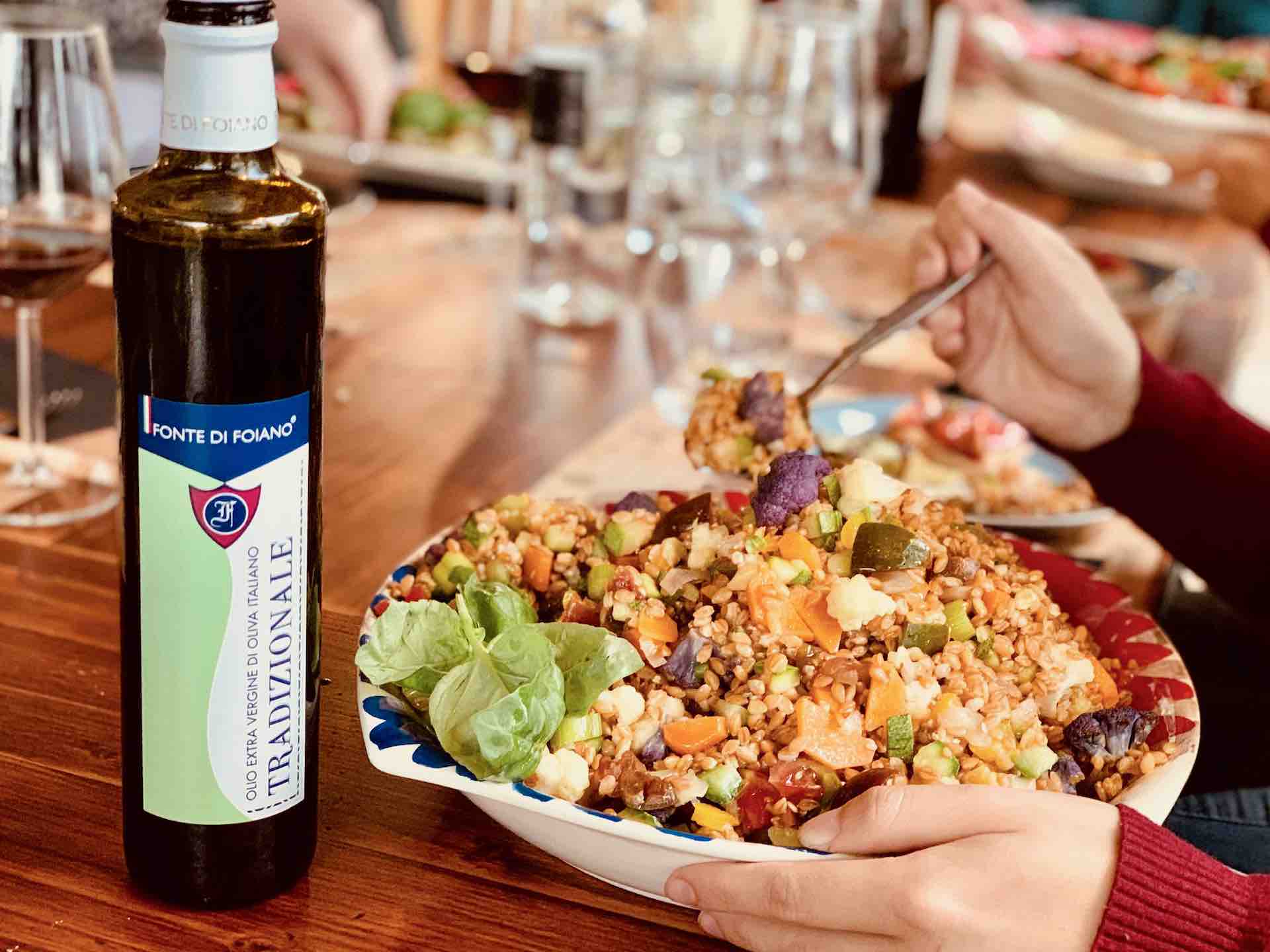
For me, the best way to enjoy our new oil is also the simplest: a slice of toasted bread, a generous drizzle of extra virgin olive oil, and perhaps a little salt.
What does extra virgin actually mean?
Extra virgin olive oil (EVOO) is made by crushing olives and extracting their oil without chemical refining. Nothing is added, and it keeps its natural flavor and many of the beneficial compounds found in olives.
But what about bottles labeled simply “Olive Oil”?
These usually contain mostly refined olive oil, blended with some virgin olive oil. Refining removes much of the original flavor and reduces many of the naturally occurring antioxidants.
That’s why I always recommend choosing extra virgin olive oil. It has more flavor and retains more of the natural antioxidants, including polyphenols and vitamin E, found in olives.
Can you cook and fry with extra virgin olive oil?
Absolutely! I use it for sautéing vegetables, roasting, baking, and frying.
You may have heard that extra virgin olive oil shouldn’t be heated because its smoke point is too low. But that’s not true!
Extra virgin olive oil is rich in monounsaturated fats and natural antioxidants, which help it stay stable when heated. Its smoke point varies depending on the quality and freshness of the oil, but it’s suitable for everyday cooking, including frying.
For frying, I usually aim for around 350°F (175°C), and I make sure the oil doesn’t start smoking.
How should you store it?
Keep olive oil away from heat, light, and air. A dark glass bottle or tin is a good choice, and it’s best to keep it away from the stove.
Once you’ve opened a bottle, enjoy it while it’s fresh rather than saving it indefinitely for a special occasion.
How do you choose a good bottle?
First, look for the harvest date. The fresher the oil, the better! Unlike wine, olive oil doesn’t improve with age.
Check where the olives were grown, not just where the oil was bottled. An Italian flag on the label doesn’t necessarily mean the olives came from Italy!
If you’re buying Italian olive oil, look for DOP (PDO) or IGP (PGI) on the label. These are European certifications that link the oil to a specific region and require producers to follow certain rules.
For example, Toscano IGP means the olives were grown in Tuscany, and the oil was produced there according to specific standards.
This turned out to be more of an ode to olive trees and extra virgin olive oil … I hope you found it interesting!
If you enjoy learning about Italian food and traditions, I’d love to welcome you to Chicca’s Cooking Club, where we cook together live from my kitchen in Tuscany.